Service
Plastering & Skimming
Plastering and skimming across West Molesey and the surrounding Surrey towns — Molesey, Esher, Walton, Kingston and beyond. From a single ceiling to a whole house, finished in British Gypsum Thistle MultiFinish and quoted in writing before we start.
By the Surrey Plasterers team
Plastering & rendering specialists · West Molesey, KT8
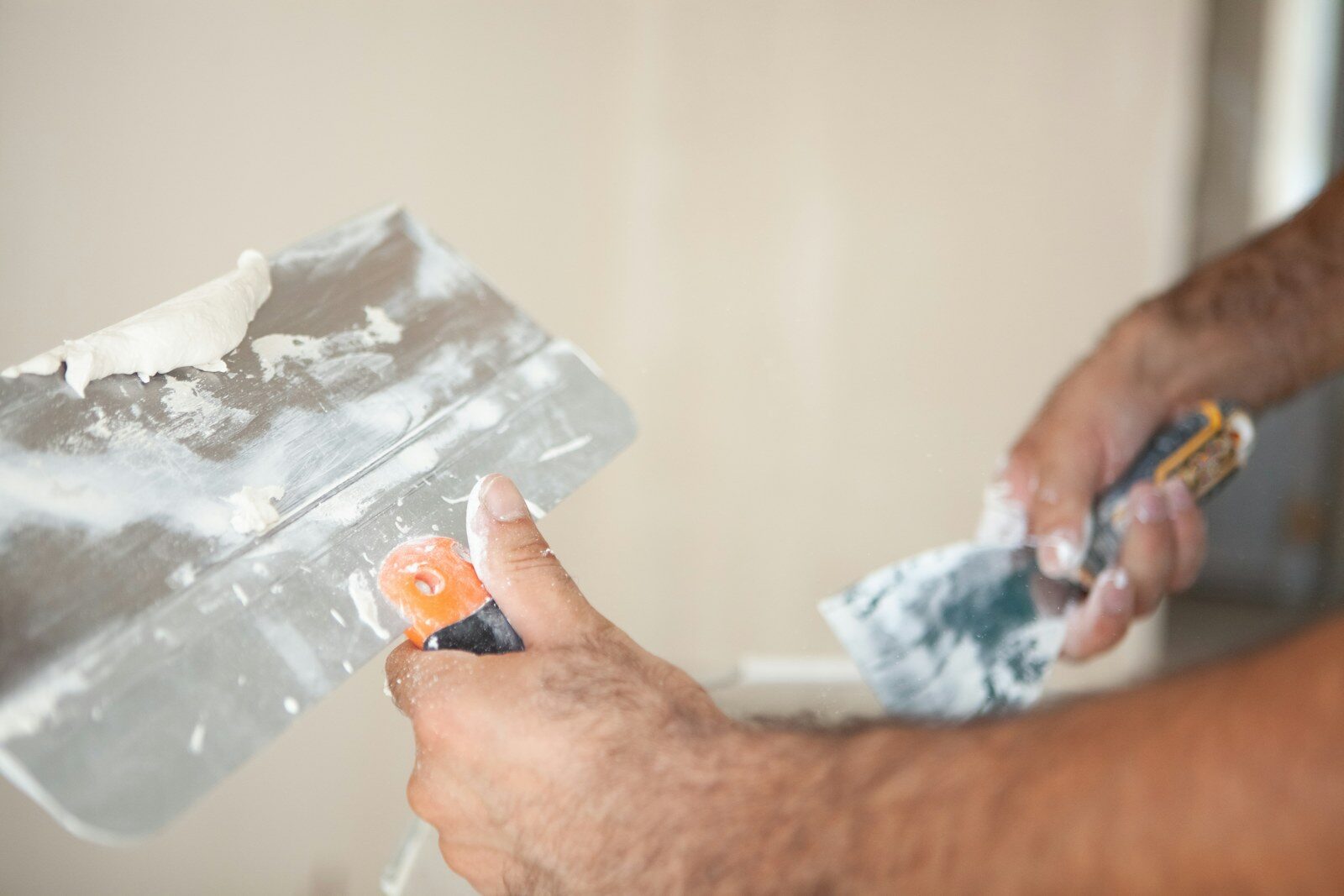
Skimming is the bread and butter of our trade and the job most Surrey homeowners actually need: a 2–3mm coat of finishing plaster laid over existing walls or fresh plasterboard, trowelled up to a surface that paints like glass. It sounds simple. The difference between a wall you stop noticing and a wall that telegraphs every ripple under the first coat of emulsion is entirely in the preparation and the flatness of the trowel work — which is why we have spent since 2010 doing little else.
The preparation is the part you are really paying for. Old plaster is thirsty, and if the suction is not controlled the new skim dries before it can be trowelled flat. So we assess every background first: sound old plaster gets a PVA or acrylic bonding agent at the right dilution, blown or hollow areas get hacked off and built back up in Thistle Hardwall or Bonding Coat, and fresh plasterboard gets Thistle BoardFinish, which is formulated for low-suction boards. Guessing at this stage is how walls end up crazing, debonding or pitting six months later.
We work tidy because we work in lived-in houses, not building sites. Floors sheeted, furniture wrapped, sockets loosened and masked, and the room swept and usable the same evening. You get a fixed written quote beforehand — per room or for the whole property — and the price does not drift once the dust sheets are down. Most skims are a one-day job per room; a full hack-off and two-coat re-plaster typically runs two to three days including drying time between coats.
Skim over or re-board: which does your wall need?
Skim over the existing surface when the old plaster is solid, dry and well adhered — tap it and it sounds dense, not hollow. Re-board (or hack off and float) when plaster is blown, crumbling, riddled with old fixings, or the wall underneath is out of true by more than a skim can hide.
The tap test is the honest ten-second survey: hollow, drummy patches mean the plaster has separated from the wall behind it, and skimming over a blown background just gives the failure a nicer surface to fall off with. Small blown patches can be cut out and filled with Bonding Coat before the skim; once more than about a third of a wall is loose, hacking off and starting again is cheaper than chasing patches. In the Victorian terraces of Surbiton — walls we know street by street — the original lime plaster is often soft but sound, and a bonding agent plus skim preserves it; where damp has got into it, that is a different job entirely.
Re-boarding — fixing fresh plasterboard over the old wall, then skimming — is the right call for badly cratered surfaces, and it is often faster and cleaner than a full hack-off. We will tell you which your walls need at the quote, wall by wall, because the answer is rarely the same for all four.
What does plastering a room cost in Surrey in 2026?
Skimming the walls of a typical room costs £250–£450 in Surrey in 2026, and a ceiling skim £200–£350, depending on size and the state of the existing surface. A full hack-off and two-coat re-plaster of a room runs £400–£700. Small patch repairs start from around £120.
Where a quote lands inside those ranges comes down to preparation, not plastering: a sound modern wall needs a coat of bonding agent and a day; a wall carrying sixty years of paint, filler and old wallpaper paste needs stripping, stabilising and sometimes partial hack-off before a trowel ever touches it. Ceiling work also prices on access and what is up there — a flat plasterboard ceiling is quick, while boarding over a tired surface and skimming runs £350–£600.
Every quote is written, itemised by room, and fixed. If we open up a wall and find something genuinely unforeseeable — hidden damp, failed backing plaster to the brick — we stop and talk to you before any extra cost exists. No day-rate drift, no "while we were in there" invoicing.
How long before I can paint fresh plaster?
A fresh skim dries in roughly 2 to 5 days depending on ventilation, season and how thick the coat is — it turns from dark brown to a pale, even pink when ready. Then paint with a mist coat first: emulsion watered down by 50–70%, so the plaster can absorb it.
The mist coat is the step people skip and regret. Fresh plaster is porous, and full-strength vinyl emulsion applied straight onto it sits on the surface as a skin that peels off in sheets — sometimes months later, taking your topcoats with it. One cheap watered-down coat solves it permanently. After that, paint as normal.
What you must not do is force it. Blasting a freshly skimmed room with heaters or a dehumidifier running flat out makes the plaster dry too fast, and fast drying is what causes shrinkage cracking and a weak, powdery surface. Open a window, keep the room ventilated, and let it take the days it takes. Winter skims in an unventilated room can need a week; that is normal, not a defect.
Why do new skims crack — and when does it matter?
Hairline cracks in a new skim are almost always shrinkage from drying too quickly, and they are cosmetic — filled and painted over, they never return. Cracks that are wider than a hairline, follow a straight line, or keep reopening after filling point to movement in the background, which no skim can fix.
Shrinkage crazing — a fine map-like pattern — happens when suction was not controlled or the room was force-dried, and it is the signature of rushed work. Done properly, with the background sealed and the plaster polished at the right moment, a skim should dry out flat and crack-free; the odd hairline at a board joint or around a window reveal is within the nature of the material and takes thirty seconds of decorator's caulk.
The cracks to take seriously are the repeat offenders: a stepped crack tracking the mortar lines, a ceiling crack that mirrors a joist, a corner crack that reopens every winter. Those are the building moving, not the plaster failing — and where damp or structural movement is the real cause, we say so plainly and point you at the right fix, such as re-plastering after damp treatment, rather than selling you a skim that papers over it.
Can you skim over wallpaper, paint or old Artex?
Paint, yes — if it is sound, keyed and sealed with a bonding agent. Wallpaper, no — it must come off, because plaster over paper fails as soon as the paste rehydrates. Old Artex, often — but pre-2000 Artex may contain asbestos, so it gets tested before anyone touches it.
Painted walls are the everyday case. Sound emulsion gets a PVA or acrylic bonding agent to give the skim both grip and controlled suction; flaking or glossy paint gets scraped, sanded or stabilised first. Wallpaper is the false economy: it feels solid today, but the moisture in fresh plaster softens the paste underneath and the whole lot can part company from the wall. Stripping it is dull work and we price it honestly.
Artex deserves its own caution. Textured coatings applied before around 2000 can contain white asbestos, and the risk is in disturbing it — sanding, scraping or hacking. Our rule is fixed: suspect material gets sampled and tested by a UKAS-accredited lab before any work, and we never disturb untested texture. Where it tests clear, skimming over a stabilised Artex ceiling is routine — see our Artex removal and covering service for the full options. And if what you actually want is a feature finish rather than flat white, a polished Venetian plaster is a different conversation we are happy to have.
What’s included
- Room skims from £250
- Thistle MultiFinish topcoat
- Full re-plastering
- Fixed written quotes
When you need this
- Walls or ceilings are tired, bumpy or patched — and paint alone keeps proving it
- You've stripped wallpaper and found the horror show underneath
- A builder has left fresh plasterboard that needs a proper skim finish
- Old plaster sounds hollow when tapped, or is cracking and shedding
- You're redecorating and want a glass-flat base before the painter arrives
- A previous skim has crazed, pitted or peeled and needs doing properly this time
How it works
1. Look and quote
We tap-test the walls, check for damp and blown plaster, and give you a fixed written price per room — including any stripping or hack-off, so there are no surprises later.
2. Protect the room
Floors sheeted, furniture wrapped and moved, sockets and switches loosened and masked. We work in lived-in homes and leave them that way.
3. Prepare the background
Wallpaper off, loose material out, blown patches cut back and rebuilt in Bonding Coat or Hardwall, then the right bonding agent at the right dilution to control suction.
4. Skim coat
Two passes of Thistle MultiFinish (or BoardFinish on fresh board), laid tight and flat, then trowelled up at the right moments as it sets — this is where flatness is won.
5. Clean down and hand over
Edges cut in, beads and reveals crisp, floors swept, washed tools and no mess left behind. The room is usable the same evening.
6. Drying and painting advice
We tell you honestly how long your room needs to dry — usually 2–5 days — and leave you written mist-coat instructions so the decoration lasts.
Plastering & Skimming prices in Surrey — from
Indicative starting prices including VAT. The exact price depends on the property, system and parts — call for a firm, fixed quote.
Skim walls of one room
From £250
Typically £250–£450 depending on size and preparation needed
Ceiling skim
From £200
Typically £200–£350 — flat plasterboard ceilings at the lower end
Full hack-off and two-coat re-plaster
From £400
£400–£700 per room including backing coat and finish
Board and skim a ceiling
From £350
£350–£600 — often the cleaner option over tired ceilings
Small patch repairs
From £120
Blown patches, chased walls, holes — matched flush to the old surface
Surrey Plasterers vs the alternatives
Honest comparison against general builders and the national franchises. Pick what works for you — but pick with the facts.
| Criteria | Surrey Plasterers | Builder / franchise |
|---|---|---|
| Who does the work | Plastering is all we do — the person who quotes is the person on the trowel | General builders fit plastering in around other trades, often subbed out |
| Preparation | Suction controlled with PVA or acrylic bonding, blown patches rebuilt first | Skim straight over whatever is there and hope |
| The quote | Fixed written price per room before we start | Day rate plus materials, totalled at the end |
| Finish standard | Flat under a raking light, ready for a mist coat | "Paint will cover it" — it won't |
| Aftercare | Drying times and mist-coat guidance in writing | Van gone by four, phone unanswered when the paint peels |
In Surrey
Local picture
Working from West Molesey keeps most of our skimming jobs within a twenty-minute drive, and the housing stock sets the work. The 1930s semis in Molesey, Walton-on-Thames and Hersham mostly carry gypsum plaster that skims beautifully once the decades of paint are stabilised. The Victorian and Edwardian terraces in Surbiton, Kingston and Thames Ditton are lath and lime — softer, hollower, and needing judgement about what to keep. The larger detached homes in Esher, Cobham and Oxshott bring whole-floor re-skims around renovations, and the new-builds around Woking bring snagging: board joints, shrinkage cracks and rushed developer finishes that a proper skim puts right.
Available across Surrey
FAQ
Plastering & Skimming — your questions, answered
How long does skimming a room take?+
Can I stay in the house while you plaster?+
Why is my fresh plaster different colours?+
Do you do small jobs — one wall, one patch?+
What plaster do you use?+
Will skimming fix damp walls?+
Is the dust as bad as people say?+
Related services
Artex Removal & Skimming
Textured ceilings flattened safely — asbestos-aware skim-overs, overboarding or removal, done right.
ReadCeiling Repairs
Sagging, cracked and water-damaged ceilings assessed honestly and repaired properly — from £120.
ReadDamp & Re-plastering
Re-plastering after damp treatment — salts hacked off, walls rebuilt to the specialist's spec.
ReadDry Lining & Plasterboarding
Dot & dab, stud partitions and tape & joint — fast, straight walls built with the right board.
ReadVenetian & Polished Plaster
Marmorino, tadelakt-style and lucidato finishes — burnished, lime-based feature walls made by hand.
ReadCoving & Cornice
Plaster coving fitted, period cornice matched and restored, ceiling roses supplied and fitted.
Read
Need a plasterer or renderer?
One number for skimming, rendering, ceilings and urgent make-safe work — and a real person answers it.