Service
Dry Lining & Plasterboarding
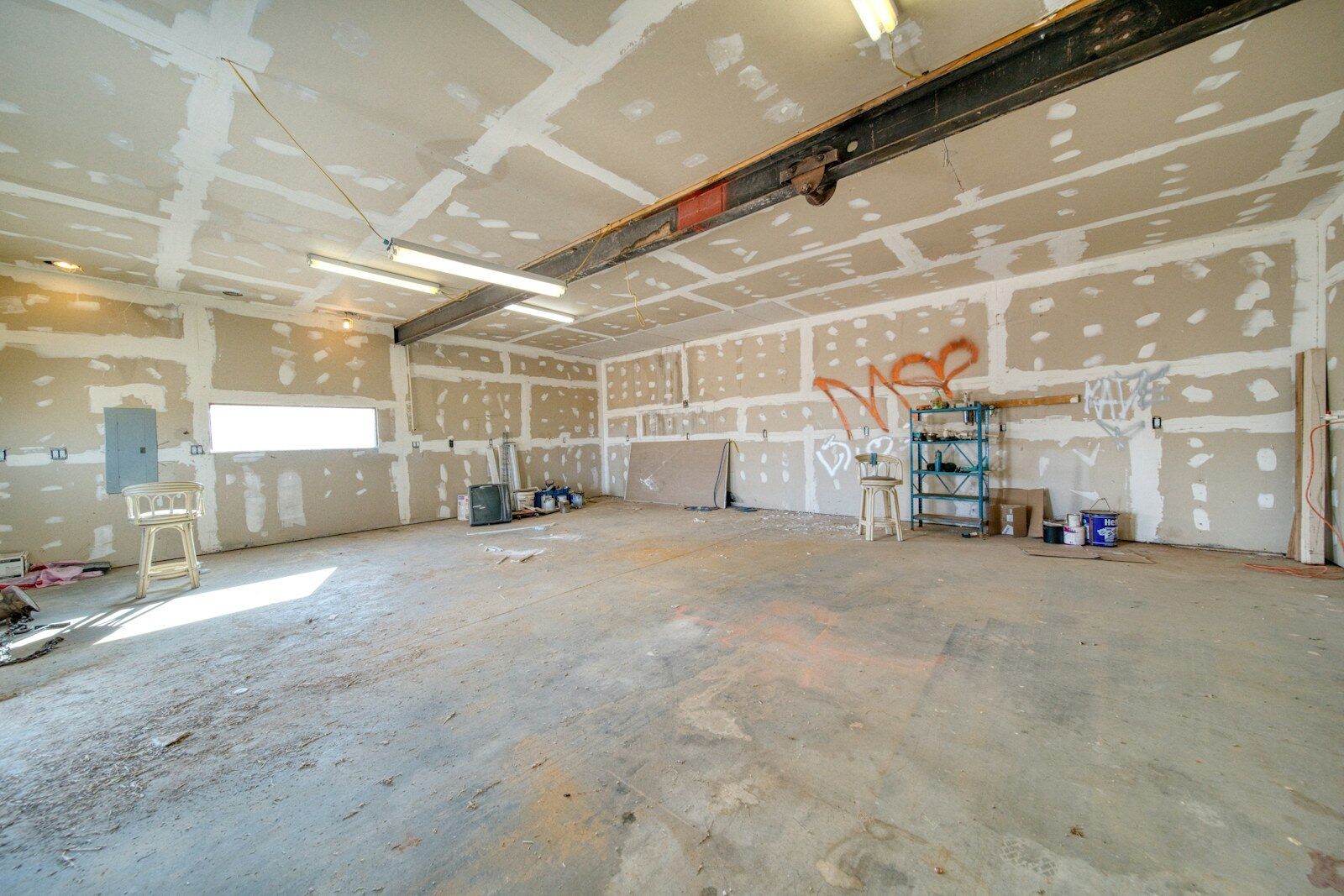
Dry lining and plasterboarding across West Molesey and Surrey: dot and dab wall linings, timber and metal stud partitions, ceilings boarded and finished by tape and joint or a full skim — the right board in the right room, every time.
By the Surrey Plasterers team
Plastering & rendering specialists · West Molesey, KT8
Dry lining is the modern way to get flat walls fast: plasterboard fixed to the structure — stuck with adhesive dabs, screwed to battens, or built as a stud partition — then finished ready for decoration. Against traditional wet plastering it wins on speed and drying time: a dry-lined room can be decorated in days rather than weeks, there is far less moisture pumped into the building, and services like cables and insulation hide neatly in the void behind the boards.
It is also where corners get cut most invisibly. Dabs spaced too far apart leave boards that flex and crack at the joints; missing continuous dabs around sockets and edges create air leakage paths that show up on thermal surveys; the wrong board in a bathroom swells the first time the extractor loses the fight with the shower. The materials are ordinary — Gyproc boards, metal or timber studs, scrim and jointing compound — so the entire difference between a crisp job and a call-back is in the setting out, the fixing centres and the finishing.
We build and finish it all: dot and dab linings over masonry, timber and metal stud partitions that divide rooms squarely and quietly, ceilings boarded over joists or over tired old surfaces, and the finish of your choice — taped and jointed for speed, or skimmed for the glass-flat surface wet plaster gives. Homes, lofts, garage conversions and commercial fit-outs, all quoted in writing from our West Molesey base.
Dot & dab or stud wall: what's the right way to build it?
Dot and dab is for lining an existing solid wall: boards bonded to the masonry with adhesive dabs, adding only 15–40mm of depth. A stud wall is for creating a wall where none exists — a timber or metal frame, boarded both sides, dividing one space into two.
They solve different problems, so the choice is usually made for you. Lining a lumpy or cold external wall, hiding chased-in cables, or covering sound-but-ugly masonry: dot and dab, every time, and done properly it is quick — a room lined in a day. Dividing a bedroom, building a loft en-suite, boxing a utility space: that is a partition, and we favour metal stud systems for most of them — dead straight out of the box, no timber shrinkage cracks at the joints later, and voids ready for insulation and services. Timber studs still earn their keep where heavy fixings or door frames demand them.
One scope note so expectations are straight: partitions are the walls themselves — where a new room needs power, lighting or waste runs, those trades slot in after first fix, and we coordinate happily with yours. Our job is that the wall is straight, solid, quiet and finished ready to decorate — and where the project includes new floors too, our floor screeding service covers the horizontal half of the job, including over underfloor heating pipes.
Tape & joint or skim finish: which should you choose?
Tape and joint finishes only the board joints and screw heads, leaving the board surface as the wall — faster, cheaper and ready to decorate sooner. A skim finish coats every inch in 2–3mm of plaster for a harder, flatter, more forgiving surface. Skim costs more; it is usually worth it in homes.
Tape and joint, done to a proper standard with feathered joints sanded flat, is the default across commercial fit-outs for good reason: it is quick, dry and consistent, and under flat matt paint it looks clean. Its weakness is raking light — low sun or wall washers can pick out the joint lines on a long wall — and the paper face of the board is less tolerant of knocks, fixings and future redecorating than plaster.
A full plaster skim over the boards gives the wall one continuous, dense surface: flatter under any light, tougher against family life, and the finish most decorators prefer to paint. Our honest steer: tape and joint for garages, utility spaces, offices and rental refreshes; skim for the living spaces of your own home. We price both on every dry lining quote so the choice is yours with the numbers in front of you.
Which plasterboard does each room need?
Standard Gyproc board suits most dry rooms. Bathrooms and kitchens need moisture-resistant (green) board. Party walls, bedrooms and home offices benefit from acoustic board. Integral garages, plant cupboards and escape routes may need fire-rated (pink) board, and cold external walls can take insulated-backed board.
Moisture board is the one that gets skipped most and regretted fastest: standard plasterboard wicks water, softens and blows its paper face in humid rooms, while the green boards carry water-repellent additives in the core — still needing tanking behind showers, but the right canvas everywhere else in a bathroom or kitchen. Acoustic boards are denser, and paired with mineral wool in the stud void they turn a flimsy partition into a wall you cannot hear a television through — the difference between a loft bedroom and a loft echo chamber.
Fire-rated boards buy defined minutes of fire resistance and are required by Building Regulations in specific places — between an integral garage and the house, under stairs on escape routes, and in much commercial work, where fire strategy drawings dictate board spec, layer count and even screw centres. Insulated boards — plasterboard factory-bonded to foam insulation — are the pragmatic upgrade when dot and dabbing the cold external walls of an older solid-wall house. We spec the board per room on the quote, and we put the spec in writing, because "it's all just plasterboard" is how bathrooms fail.
What does dry lining cost in 2026?
As a working guide for 2026: dot and dab lining runs per board with room prices typically £350–£700 depending on wall area and board spec; a straightforward stud partition, boarded both sides and finished, from around £450; tape and joint finishing is cheaper than skim by roughly a third.
The variables that move a quote are board specification — moisture, acoustic, fire-rated and insulated boards all cost more than standard — insulation in the void, the number of openings (a doorway means a frame, a lintel detail and more cutting), and the finish you choose. Ceilings price higher per square metre than walls because overhead boarding is slower, two-person work; boarding over a tired existing ceiling and skimming typically runs £350–£600 a room.
We quote fixed and itemised: boards, studs, insulation, finish and making-good as separate lines, so you can see exactly what adding acoustic board to the bedroom wall or upgrading the finish from tape and joint to skim actually costs. Small jobs are welcome — a single lined wall or one partition is a normal day's booking, not a nuisance — and for larger fit-outs we price per square metre with the rates shown, so extending the scope mid-project carries no mystery.
What’s included
- Dot & dab wall linings
- Timber & metal stud partitions
- Tape & joint or skim finish
- Moisture & acoustic boards
When you need this
- You're dividing a room, converting a loft or garage, and need new walls built properly
- Old walls are too far gone to skim and re-boarding is the cleaner, faster fix
- A bathroom or kitchen refit needs moisture-resistant board before the tiler arrives
- You can hear every word through a partition and want acoustic board and insulation in it
- Cold external walls need insulated-backed board to stop the room losing heat
- A commercial unit or office needs partitions and tape-and-joint finishing on a deadline
How it works
1. Measure and spec
We measure up, agree the layout, and spec the right board for each room — standard, moisture, acoustic, fire-rated or insulated — with the reasoning explained.
2. Fixed written quote
Boards, framing, insulation, finish and making-good itemised separately, with tape-and-joint and skim finishes both priced where it helps you choose.
3. Set out and frame
Partitions set out square to the room, metal or timber studs fixed at proper centres, door openings framed, and services routes agreed before a board goes on.
4. Board
Boards fixed to correct centres with the right screws and adhesive coverage — joints staggered, edges supported, cut-outs neat. This is where call-backs are prevented.
5. Finish
Tape and joint with scrim and feathered compound, sanded flat — or a full two-coat Thistle skim for the dense, glass-flat surface.
6. Clean handover
Offcuts and dust gone, floors swept, and honest guidance on decorating: mist coat over skim, sealed and primed over tape and joint.
Dry Lining & Plasterboarding prices in Surrey — from
Indicative starting prices including VAT. The exact price depends on the property, system and parts — call for a firm, fixed quote.
Dot & dab lining, per room
From £350
Typically £350–£700 depending on wall area and board spec
Stud partition, built and finished
From £450
Timber or metal stud, boarded both sides — openings and doors add to it
Board & skim a ceiling
From £350
£350–£600 — often the best fix over a tired old ceiling
Moisture-resistant board upgrade
From £40
Per-room uplift for bathrooms and kitchens — cheap insurance
Acoustic board & insulation upgrade
From £90
Denser board plus mineral wool in the void — a genuinely quieter wall
Surrey Plasterers vs the alternatives
Honest comparison against general builders and the national franchises. Pick what works for you — but pick with the facts.
| Criteria | Surrey Plasterers | Builder / franchise |
|---|---|---|
| Board selection | Specified per room — moisture, acoustic, fire, insulated — in writing | General builders fit whatever standard board is on the van |
| Fixing standards | Correct dab coverage and screw centres — no flexing, no cracked joints | Minimum dabs, stretched centres, cracks by Christmas |
| Finish options | Tape & joint and skim both priced — your choice with numbers | One finish offered, usually whichever is quicker that week |
| Who turns up | The same small team that quoted — drylining is our trade | Nationwide firms rotating subcontract gangs through your job |
| The quote | Fixed and itemised down to the insulation | A lump sum that grows when the "extras" surface |
In Surrey
Local picture
Dry lining work takes us everywhere our trowels go — West Molesey, Walton, Hersham, Esher, Kingston and out to Woking — but the jobs differ by housing stock. Loft conversions in the 1930s semis of Molesey and Hersham are partition-and-board territory, usually with acoustic upgrades once owners hear the first draft of a boarded loft. The Victorian terraces of Surbiton and Thames Ditton get insulated-backed linings on cold solid walls. The larger Esher and Cobham homes bring basement and garage conversions with fire-rated specs. And around Woking, developer fit-outs and snagging — cracked joints, popped screws, missed moisture board — keep us busier than we would like to admit.
Available across Surrey
FAQ
Dry Lining & Plasterboarding — your questions, answered
Is dry lining as good as wet plastering?+
Can you fix heavy things to a dry-lined wall?+
How soon can a dry-lined room be decorated?+
Do stud walls need Building Regulations approval?+
What is the gap behind dot and dab boards for?+
Can you dry line over a damp wall?+
Metal studs or timber — which is better?+
How long does a stud wall take to build?+
Related services
Plastering & Skimming
Smooth, flat walls and ceilings — one-room skims to whole-house re-plasters, quoted in writing.
ReadFloor Screeding
Sand & cement and liquid screeds, laid flat, cured right and moisture-tested — underfloor heating a speciality.
ReadCommercial Plastering
Trade plastering for builders, developers and shopfitters — tape & joint, MF ceilings and phased site work.
ReadCeiling Repairs
Sagging, cracked and water-damaged ceilings assessed honestly and repaired properly — from £120.
ReadCoving & Cornice
Plaster coving fitted, period cornice matched and restored, ceiling roses supplied and fitted.
Read
Need a plasterer or renderer?
One number for skimming, rendering, ceilings and urgent make-safe work — and a real person answers it.