Service
Damp & Re-plastering
After a damp-proof course goes in, the wall still has to be rebuilt properly — salt-contaminated plaster off, the right system back on. We do that re-plastering to the damp specialist's spec across West Molesey and Surrey, and we are honest about what we don't do: the DPC itself.
By the Surrey Plasterers team
Plastering & rendering specialists · West Molesey, KT8
Half of a damp job happens after the damp specialist drives away. Injecting a chemical damp-proof course or fixing the source of moisture stops water rising — but it does nothing about the plaster already ruined by years of damp, loaded with the hygroscopic salts that moisture carried up from the ground. That contaminated plaster has to come off and the wall rebuilt with the right system, or the "cured" wall will look damp again within a year.
Let us be straight about where we sit in that chain: we are plasterers, not a damp-proofing company. We do not install or inject DPCs, we do not sell damp surveys, and we will not pretend a skim coat fixes a moisture problem. What we do — and do a great deal of — is the re-plastering that follows professional damp treatment, built exactly to the specification the damp specialist issues, because their guarantee usually depends on it.
The work itself is uncompromising: hack off the salt-contaminated plaster to around a metre, or at least 300mm above the visible tide mark; rebuild with renovating plaster or sand and cement with a salt inhibitor — or lime where the building needs to breathe; finish with Thistle MultiFinish; and then respect the drying. A solid wall dries at roughly one month per 25mm of thickness, and no plasterer can trowel that fact away. Typical cost per wall is £400–£900, quoted fixed after we have seen it.
Why does plaster blow after damp — and why can't you just skim it?
Because the problem is in the plaster, not on it. Rising moisture carries hygroscopic salts up into the wall, where they stay after the water is stopped. Those salts pull moisture from the air forever, so salt-loaded plaster reads damp for good — and skimming over it ruins the new coat too.
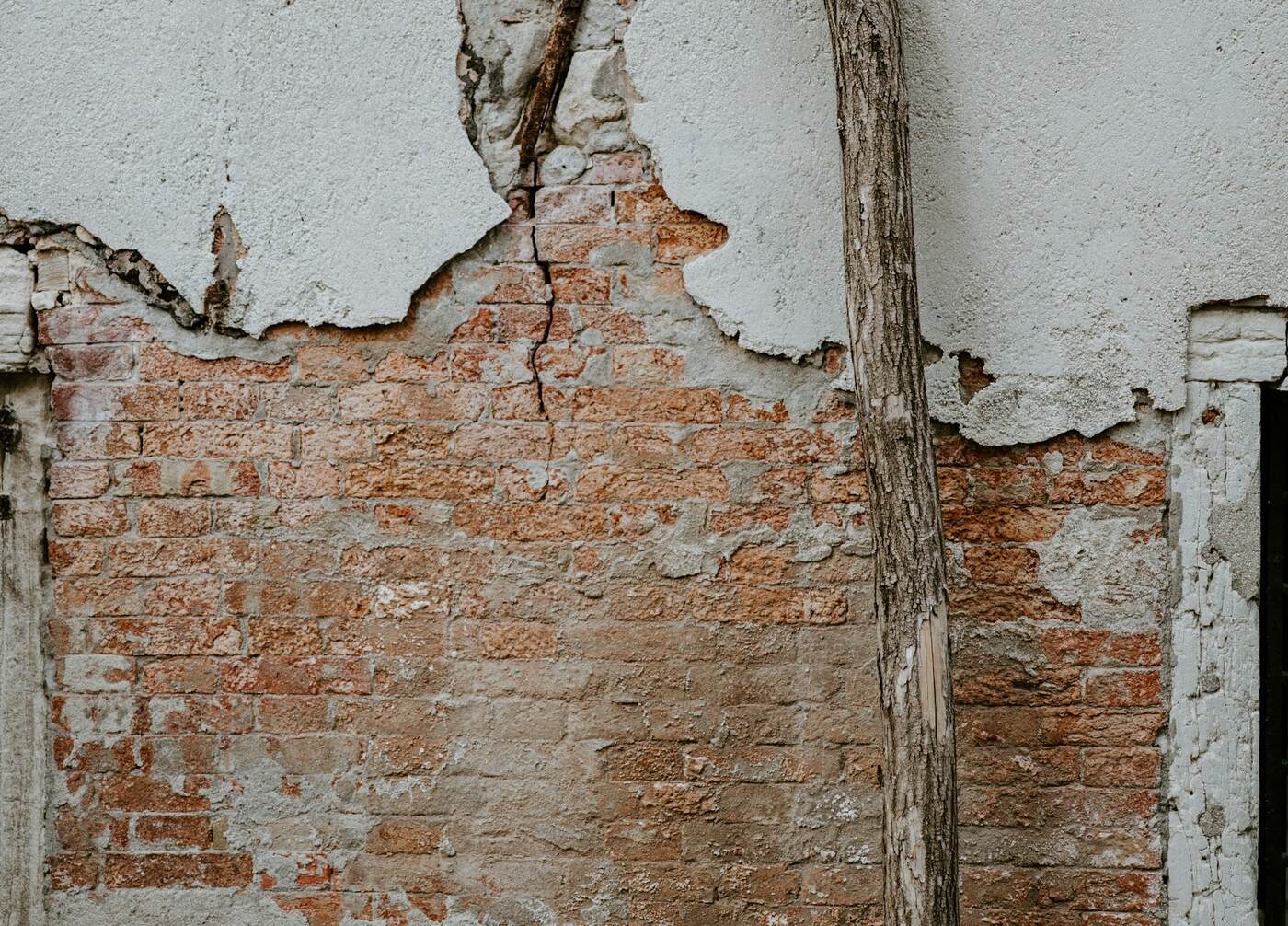
That is why "blown" plaster around old damp is so distinctive: it sounds hollow when tapped, the surface crumbles back to powder, paint lifts in sheets, and a fluffy white bloom of salt crystals pushes through anything applied over it. The gypsum in standard plaster is itself moisture-sensitive, so once damp and salts get in, it breaks down mechanically — no sealer or stain block rescues it.
The only honest fix is removal: the contaminated plaster comes off back to the masonry, past the visible damage, and the wall is rebuilt with a system designed to hold residual salts back while the masonry finishes drying. It is messier and dearer than a skim — and it is the difference between a wall fixed once and a wall redecorated annually.
What happens after a damp-proof course: the re-plastering spec
The damp specialist who installs or injects the DPC issues a re-plastering specification — typically: hack off to one metre, or at least 300mm above the highest tide mark; rebuild in a salt-resistant system; keep the new plaster clear of the floor. Their guarantee usually depends on that spec being followed. We build to it.
This division of labour protects you. The DPC and the survey behind it are the damp-proofing company's product, often with a long guarantee attached — and that guarantee is conditional on the wall being reinstated their way. If a builder re-plasters casually in standard gypsum straight off the brick, the guarantee is compromised the day it is written. We work from the specialist's written spec and note the materials used, so the paper trail stays intact.
The same logic applies to other moisture sources. Penetrating damp through a tired external wall is often a job for fresh render outside before anything is rebuilt inside, and a one-off soaking — a leak from above, pipework failure, a flood — is a different animal again: see our water-damaged plaster service for that. Diagnosis first, plaster second, always.
Renovating plaster, sand & cement or lime: which system?
Renovating plaster is the usual choice: a purpose-made, salt-resisting backing that tolerates residual moisture while the wall dries. Sand and cement with an added salt inhibitor is the harder-wearing traditional alternative many DPC specs call for. Lime is the right answer in older solid-wall buildings where breathability matters more than speed.
For most post-DPC work in the 1930s and later stock around Molesey, Walton and Hersham, the first two do the job: renovating plaster where the spec allows it, sand and cement with inhibitor where the specialist demands it, each finished with Thistle MultiFinish once the backing has set. Both hold salts back at the backing layer so the finish and your decoration stay clean.
The older, solid-wall stock is a different conversation. Victorian terraces toward Surbiton and Kingston — and especially the listed cottages out toward Guildford, Farnham and Godalming — were built to breathe, and sealing a solid wall behind dense cement can push moisture somewhere worse. There, breathable lime plaster is often the honest specification even when it is the slower one, and we will say so even when the cheaper system would have won us the quote.
What does damp re-plastering cost in Surrey?
Re-plastering a wall after damp treatment typically costs £400–£900 per wall with us, covering hacking off the contaminated plaster, disposal, the specified backing system — renovating plaster, sand and cement with salt inhibitor, or lime — and a Thistle MultiFinish top coat. Price depends on wall size, system and access.
The spread is mostly about what comes off and what goes on. Hacking off is slow, heavy, dusty work — we sheet out thoroughly and take the rubble away — and lime systems cost more in material and programme than renovating plaster. Several walls done together price better than one visit at a time, and re-skimming the room's unaffected walls in the same visit gets everything to one uniform surface for less than a separate booking.
What the figure does not include is the damp treatment itself — the survey, the DPC, any drainage or ground-level corrections — which belongs to the damp specialist and their guarantee. Beware of any single quote that bundles diagnosis, injection and re-plastering into one suspiciously tidy number: the trades are different, and the accountability should be too.
How long before a damp wall can be decorated?
Longer than anyone wants. The masonry itself dries at roughly one month per 25mm of wall thickness — so a 225mm solid brick wall can take nine months to dry fully. The new plaster surface is paintable far sooner: once the finish coat has dried evenly, a mist coat of watered-down emulsion can go on.
The practical sequence: let the fresh skim dry for its usual 2–5 days, mist-coat, then use breathable emulsion in thin coats — and hold off on vinyl papers, washable paints and anything film-forming until the wall has had its full drying time. A breathable finish lets residual moisture keep escaping; an impermeable one traps it, blisters or shadows, and then the re-plastering gets blamed for physics.
Help the wall along with ventilation and steady background warmth rather than blasting it — fast, fierce drying can drag more salts to the surface. Expect the odd faint bloom of salt on the mist coat, which brushes off dry. We put the realistic dates for your actual wall thickness in writing with the quote, because the schedule is the part of this job nobody else seems willing to be honest about.
What’s included
- Re-plastering to the DPC spec
- Salt-contaminated plaster hacked off
- Renovating, sand & cement or lime systems
- Honest drying-time guidance
When you need this
- A damp specialist has installed or injected a DPC and the walls now need re-plastering to their spec
- Plaster near the skirting is blown, crumbly or bubbling, with a tide mark above it
- White salty deposits keep pushing through paint on a ground-floor wall
- You're buying or selling and the survey calls for damp treatment and reinstatement plastering
- A previous "fix" was skimmed straight over damp plaster and the stains are back
- You own an older solid-wall or listed property and want a breathable reinstatement, not a cement seal
How it works
1. Confirm the damp is dealt with
We work after the cause is fixed, not instead of fixing it. If you don't yet have a specialist's diagnosis and treatment, that comes first — we can suggest the right kind of firm to speak to.
2. Price to the written spec
We quote from the specialist's re-plastering specification — heights, system, details — so their guarantee stays intact. Fixed price per wall before anything is hacked off.
3. Hack off and clear
Contaminated plaster removed to one metre or at least 300mm above the tide mark, back to sound masonry. Sheeted out properly, rubble taken away.
4. Rebuild with the specified system
Renovating plaster, sand and cement with salt inhibitor, or lime where breathability matters — applied to spec, kept clear of the floor line.
5. Thistle MultiFinish top coat
A smooth finish coat once the backing has set, trowelled up ready for a mist coat after 2–5 days of drying.
6. Written drying and decorating guidance
Realistic drying dates for your wall thickness — the one-month-per-25mm rule — plus what to paint with and when, so the job is never undone by decorating too soon.
Damp & Re-plastering prices in Surrey — from
Indicative starting prices including VAT. The exact price depends on the property, system and parts — call for a firm, fixed quote.
Re-plaster one wall post-DPC
From £400
£400–£900 by wall size and system — hack-off, backing coat and MultiFinish included
Renovating plaster system
From £400
The standard salt-resisting rebuild for most post-treatment walls
Sand & cement with salt inhibitor
From £450
The harder-wearing traditional system many DPC guarantees specify
Lime reinstatement (solid-wall / listed)
From £550
Breathable system for older buildings — slower, and the right call where it's the right call
Multiple walls, same visit
From £350
Per-wall rate falls when hack-off and setup are shared across a room
Surrey Plasterers vs the alternatives
Honest comparison against general builders and the national franchises. Pick what works for you — but pick with the facts.
| Criteria | Surrey Plasterers | Builder / franchise |
|---|---|---|
| Honesty about scope | We say plainly: we re-plaster, we don't install DPCs | One-stop outfits selling the survey, the injection and the plastering with no independent check |
| The guarantee | Built to the specialist's written spec so their paperwork holds | General builders re-plastering in standard gypsum — guarantee void before the paint dries |
| Salts | Contaminated plaster off to 300mm above the tide mark, minimum | Skim-and-seal cover-ups that shadow through within the year |
| System choice | Renovating, sand & cement or lime — matched to the building | Whatever is on the van, whatever the wall |
| Drying times | Realistic dates in writing — one month per 25mm, like it or not | "Paint it next weekend" — and the callback blamed on the decorator |
In Surrey
Local picture
Rising damp and its aftermath follow the housing stock. The Victorian terraces around Surbiton, Kingston and Thames Ditton pre-date reliable damp-proof courses, and their solid walls punish cement-heavy repairs — much of our work there is breathable lime reinstatement after treatment. The 1930s semis across Walton, Hersham and the Moleseys have DPCs that are now ninety years old, bridged by flower beds and raised paths, so post-injection re-plastering is steady work. Out toward Guildford, Farnham and Godalming, listed cottages need the lime conversation before anything else. We are based in West Molesey, established 2010, and we work happily alongside the area's damp specialists — each trade doing the part it is actually qualified to do.
Available across Surrey
FAQ
Damp & Re-plastering — your questions, answered
Do you install damp-proof courses?+
Can't you just skim over the damp patch?+
How much plaster has to come off?+
Why does my wall still look damp months after treatment?+
Which paint should I use on the reinstated wall?+
Is lime plaster really necessary on an older house?+
Related services
Rendering
Monocouche, silicone and sand & cement render — weatherproof exteriors with a fixed written quote.
ReadLime Plastering
Breathable haired lime plaster on lath for listed and period Surrey homes — three-coat work done properly.
ReadPlastering & Skimming
Smooth, flat walls and ceilings — one-room skims to whole-house re-plasters, quoted in writing.
ReadCeiling Repairs
Sagging, cracked and water-damaged ceilings assessed honestly and repaired properly — from £120.
ReadFloor Screeding
Sand & cement and liquid screeds, laid flat, cured right and moisture-tested — underfloor heating a speciality.
Read
Need a plasterer or renderer?
One number for skimming, rendering, ceilings and urgent make-safe work — and a real person answers it.